Fourteen years of someone else's Mondays
WorkOrders wasn't designed in a workshop and taken to market. It was written for one firm that needed it, and then it just kept being used — every working day, by people who would have told us immediately if it got in their way.
How it started
In 2012 an electrical company had a problem that will sound familiar: work came in by email, it got forwarded around, and whether a job happened depended on whether the right person had read the right message. They asked for something to fix it. What they got was the first version of this — a mailbox that turned requests into jobs, and a way to hand those jobs to whoever was closest to them.
It was never a product. It was one company's tool, and it was shaped entirely by what that company hit in a real week: the email with no subject line, the photo of a leak that needed to stay attached to the job, the customer who wanted telling when someone was on the way.
How it kept going
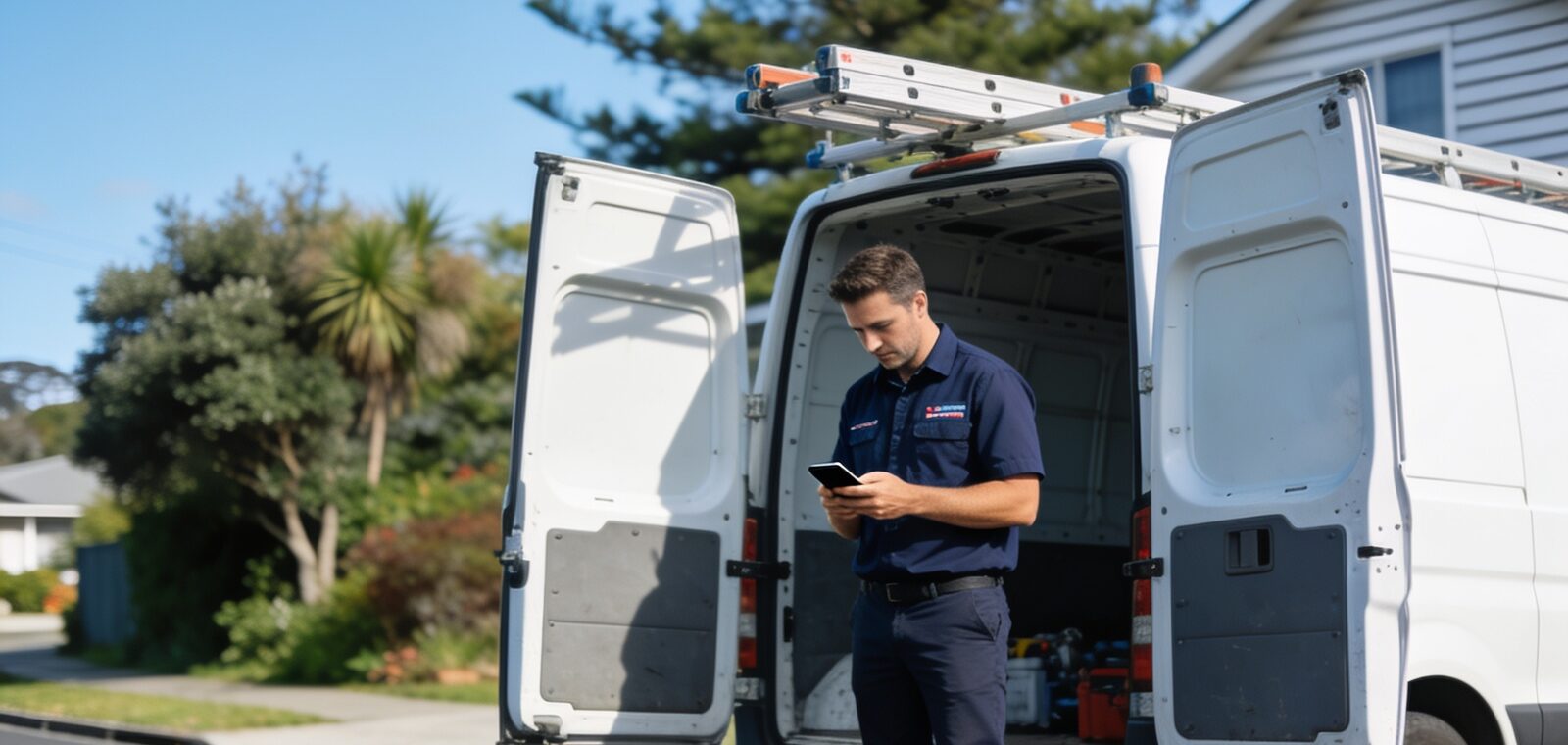
A plumbing firm picked it up and has run on it ever since. Their office dispatches on it and their technicians carry it in the van — which means every rough edge has had years of someone hitting it at 7am with a customer on hold. Very little marketing software gets that kind of testing. Almost none of it survives it.
That is the part we would actually put money on: not that WorkOrders has the longest feature list, but that the things it does are the things a working crew needed badly enough to keep using for over a decade.
Why the rebuild
The original was built on tools that were current in 2012, and it was showing. So Molehill Creations, in Wellington, has rebuilt it properly: a modern stack, real multi-tenancy, an AI layer that reads the incoming mail, proper billing — and a deliberate, byte-for-byte compatibility with the old system, so the crews already on it can come across without losing their history or relearning the app in their pocket.
We are a small New Zealand outfit. That is the trade you are making: no 24-hour call centre, and no chance of the product being sunset because it stopped fitting somebody's roadmap. When you email support, the person who reads it can change the software.

The short version
- 2012
- Written for an electrical company that was losing jobs in an inbox.
- Since then
- Run every working day by a plumbing firm — office and field.
- Now
- Rebuilt as a modern SaaS by Molehill Creations Ltd, Wellington.
- Next
- Open to any NZ trades business that recognises the problem.
How we work
We say what isn't built
The features page has a list of things we do not do yet, with reasons. You will find out in week one of the trial anyway.
Your data leaves as easily as it arrived
CSV export is a first-class feature, not a retention lever. If you go, you take everything with you.
No per-seat surprises
Flat plans with a cap. Adding a person is never a price change you find out about on an invoice.
The mailbox stays yours
We read and label. We do not delete, trash, or mark mail read. Your office manager's inbox keeps working the way they expect.
Built with tradies, not at them
Try it for 20 days and tell us where it's wrong. That's how it got this far.